Accessibility Tools

Ultrapure Water Systems

Why Water Quality Matters in Data Center Cooling

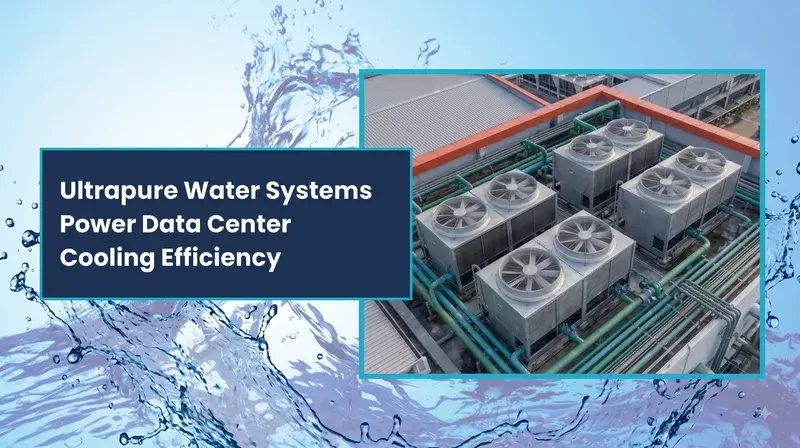
Ultrapure water systems provide low-TDS, high-resistivity water that helps reduce scale, corrosion, and fouling in critical data center cooling equipment. Dissolved solids, hardness, silica, and other contaminants can create deposits on heat-transfer surfaces, increasing thermal resistance and forcing pumps, fans, and chillers to work harder. Maintaining cleaner water helps preserve consistent heat transfer, flow, pressure, and temperature, which becomes increasingly important in high-density, AI, GPU, closed-loop, and direct-to-chip cooling applications.

How Ultrapure Water Is Produced

Ultrapure water treatment typically combines pretreatment, reverse osmosis (RO), and a polishing process such as electrodeionization (EDI) or mixed-bed deionization. Pretreatment removes suspended solids and can address hardness, while RO removes most dissolved salts, organics, and particulates. EDI further treats RO permeate by removing remaining ions without the acid and caustic regeneration required by conventional regenerable ion-exchange systems. These technologies can be configured as modular treatment systems based on a facility’s required flow rate and water-quality specifications.

Improving Cooling Efficiency and Reliability

Cleaner water helps keep heat exchangers, cooling plates, piping, valves, and other components free from deposits that can reduce cooling performance over time. Stable water chemistry can help maintain design heat-transfer efficiency, limit increases in hydraulic resistance, and reduce scale- and corrosion-related maintenance. In appropriate systems, improved water treatment can also support higher cycles of concentration, reduced blowdown, lower water consumption, and less chemical handling while helping operators maintain more predictable cooling performance.

Specifying Ultrapure Water Systems for Data Centers

Selecting an ultrapure water system begins with evaluating feedwater quality, including TDS, hardness, silica, and seasonal variations, and determining the required water purity for each cooling application. Engineers should also consider flow requirements, redundancy, available space and power, maintenance access, controls and monitoring, and lifecycle costs. For high-density, sustainability-focused, or water-constrained data centers, properly specified ultrapure water treatment can support cooling efficiency, equipment protection, water stewardship, and reliable long-term operation.

Case Studies

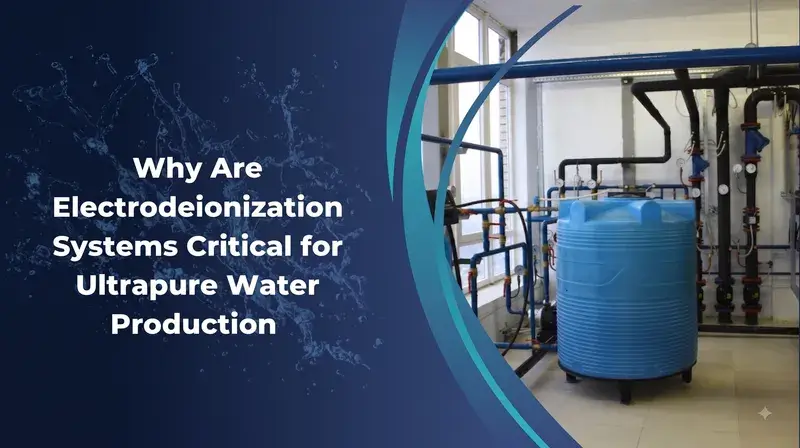
Electrodeionization (EDI) systems are critical for ultrapure water production because EDI continuously removes dissolved ionic species from reverse osmosis permeate using DC current and ion-selective membranes, producing water at resistivity up to 18.2 MΩ·cm without chemical regeneration — delivering uninterrupted, consistent ultrapure water output 24 hours a day, 7 days a week. What Is Electrodeionization? Electrodeionization (EDI) is a continuous water purification process that uses DC electrical current, cation-selective membranes, anion-selective membranes, and ion exchange resin arranged in alternating dilute and concentrate chambers to remove dissolved ionic species from water. EDI operates as continuous electrodeionization (CEDI) — meaning no regeneration cycle …

Read Full Article

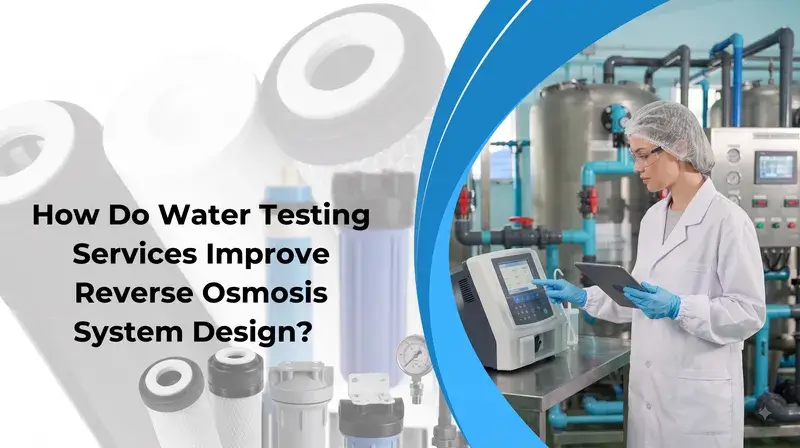
Water testing services improve reverse osmosis system design by directly determining 6 critical engineering decisions — membrane type selection, operating pressure, recovery rate, flux rate, pre-treatment configuration, and antiscalant dosing. Feed water analysis translates raw water chemistry data into precise system specifications. Without a complete water analysis, reverse osmosis system design can result in incorrect pre-treatment selection, accelerated membrane fouling, and costly system failure. Water testing services establish the diagnostic foundation for every accurate reverse osmosis system design. What Is a Water Testing Service for Reverse Osmosis Systems? A water testing service is a laboratory-based analysis process that measures feed water …

Read Full Article

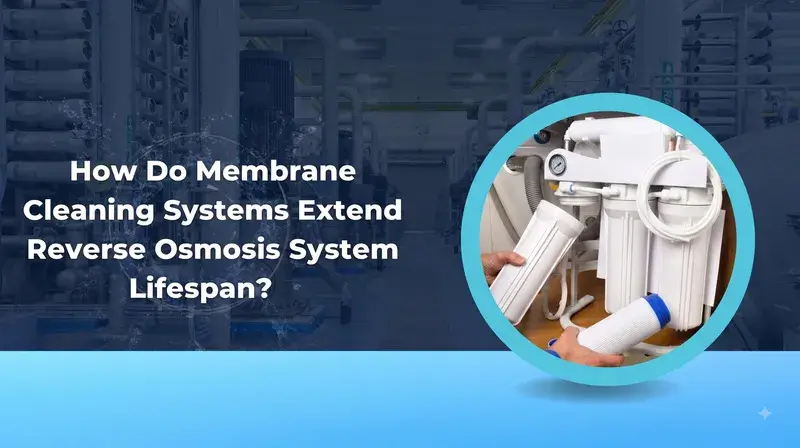
Membrane cleaning systems extend reverse osmosis system lifespan by removing fouling deposits that reduce normalized permeate flow, increase transmembrane pressure, and accelerate membrane degradation. Without scheduled clean-in-place (CIP) procedures, RO membranes fail 40–60% earlier than their rated service life of 3–7 years. 4 fouling types—scaling, biofouling, colloidal fouling, and organic fouling—each require specific cleaning chemistries applied at defined performance thresholds. What Causes RO Membrane Fouling? RO membrane fouling occurs when dissolved solids, biological matter, and suspended particles accumulate on membrane surfaces, reducing system performance. 4 fouling types affect reverse osmosis membranes: Scaling — calcium carbonate, calcium sulfate, and silica deposits crystallize …

Read Full Article

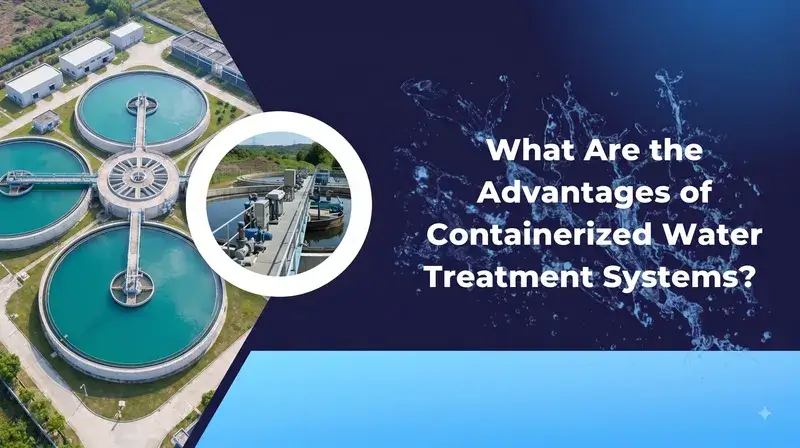
Containerized water treatment systems offer 7 primary advantages — rapid deployment, portability, lower capital cost, scalability, multi-technology integration, suitability for demanding environments, and factory-tested reliability. Each system arrives pre-plumbed, pre-wired, and factory-tested for plug-and-play operation, reducing on-site installation complexity for industrial, municipal, oil & gas, and emergency response applications. What Is a Containerized Water Treatment System? A containerized water treatment system is a self-contained, pre-engineered water purification unit housed within a standard ISO shipping container, pre-plumbed and pre-wired for plug-and-play operation. Each unit integrates multiple treatment technologies — including Reverse Osmosis (RO), Nanofiltration (NF), Ultrafiltration (UF), Seawater Desalination, Ion Exchange, Media …

Read Full Article

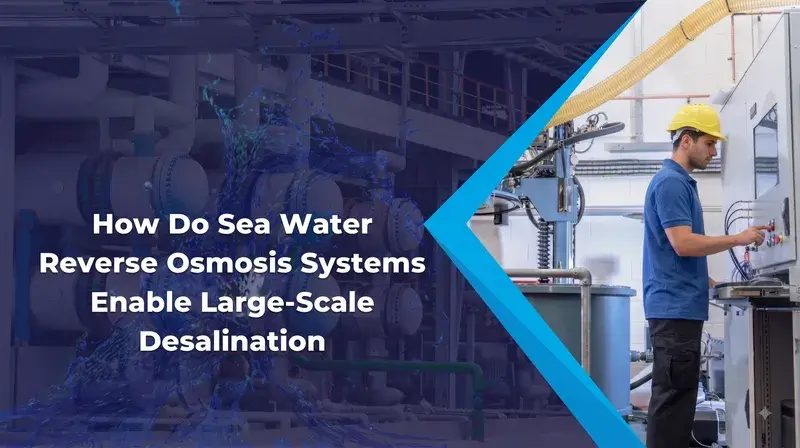
Sea water reverse osmosis systems enable large-scale desalination by forcing seawater through semi-permeable membranes at 800–1,200 psi, rejecting 99% or more of dissolved salts. Seawater carries a total dissolved solids (TDS) concentration of 30,000–45,000 ppm. Large-scale SWRO systems reduce seawater TDS to below 500 ppm , the EPA maximum contaminant level for drinking water. What Is Seawater Reverse Osmosis Desalination? Seawater reverse osmosis (SWRO) desalination is a pressure-driven, membrane-based, salt-rejecting process that converts seawater into potable or process-grade water. Mid-scale desalination produces 1 MGD or more of treated water per day. Reverse osmosis accounts for 69% of global desalination capacity. The …

Read Full Article

Still have questions? We're just a phone call away!
If you have any questions, we’re only a phone call away. Need something for your business? Check out our commercial water softeners. For more information, please contact us at (713) 664-4601 or fill out our form.
1
My Info
2
Send
Please Contact Regarding: *
of characters remaining.
*required
some conditions apply