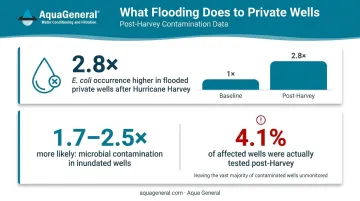
Finding coliform in your well doesn't automatically mean someone got sick. But it does mean something has gone wrong structurally or environmentally, and ignoring it carries real risk. According to a peer-reviewed study of 8,822 private wells across 44 Texas counties, E. coli occurrence was 2.8 times higher after Hurricane Harvey than at baseline — a sobering number for anyone on a private well in the Gulf Coast region.
This guide covers how contamination enters your well, what to do when it does, and how to prevent it from coming back.
Key Takeaways
- Coliform bacteria are indicator organisms — their presence signals a structural or environmental problem, not just a water quality one
- The most common entry points are damaged well caps, failed septic systems, surface runoff, and flooding
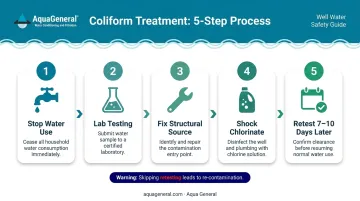
- Treatment follows a specific sequence: stop use → test → fix the source → disinfect → retest
- Annual testing is the minimum standard; flood-prone areas like Harris and Fort Bend Counties warrant more frequent checks
- A whole-house water treatment system with anti-microbial protection adds a persistent layer of defense that structural maintenance alone cannot provide
How Coliform Bacteria Gets Into Well Water
Coliform bacteria don't originate inside your well — they always enter from outside through a compromised pathway. Knowing which type is present shapes the required response:
| Type | Source | What a Positive Result Means |
|---|---|---|
| Total coliform | Soil, vegetation, surface water, animal/human waste | General warning; doesn't confirm fecal contamination on its own |
| Fecal coliform | Intestines and feces of warm-blooded animals | Indicates a fecal pathway and possible pathogen entry |
| E. coli | Human and animal intestines and feces | Strongest indicator of sewage or waste contamination; some strains cause severe illness |
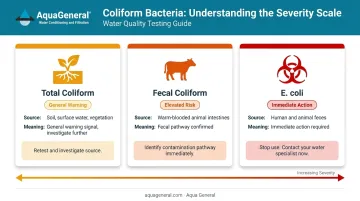
Don't use these terms interchangeably. A total coliform positive requires investigation. An E. coli positive requires immediate action.
Damaged or Missing Well Caps and Casings
A cracked, loose, or missing well cap creates a direct entry point for insects, debris, and bacteria-laden runoff.
Older concrete, clay tile, or brick-cased wells are especially vulnerable. Their casings can develop cracks or pores that allow unfiltered surface water to seep directly into the well column, bypassing any soil filtration.
Failed or Improperly Located Septic Systems
The EPA and Texas A&M's Texas Well Owner Network both identify clear separation requirements: 50 feet minimum between a well and a septic tank, and 100 feet from drain fields or spray areas.
Wells that fall short of these distances, or that sit near aging, cracked, or overloaded systems, face ongoing fecal coliform risk regardless of how structurally sound the well itself appears.
Surface Water Proximity and Agricultural Runoff
Shallow or hand-dug wells near lakes, ponds, or streams are especially susceptible to bacteria-laden water infiltrating the groundwater table. Animal waste from nearby pastures, feedlots, or even dog runs can carry fecal coliform through soil percolation into the water supply. The shallower the well, the less natural filtration stands between the surface and your water.
Flooding and Heavy Rainfall Events
Flood events can submerge wellheads entirely, bypassing the soil filtration layer that normally blocks contaminants. For well owners in Harris, Fort Bend, Brazoria, and surrounding counties, this is a recurring seasonal reality, not a remote risk.
Post-Harvey data underscores just how serious the exposure is:
- Microbial contamination was 1.7 to 2.5 times more likely in inundated wells
- Only an estimated 4.1% of potentially affected wells were tested afterward
Health Risks and Warning Signs of Coliform Contamination
Most total coliform strains aren't directly harmful. The concern is what their presence signals: that a pathway exists for genuinely dangerous organisms to enter your water. Fecal coliform and E. coli are the higher-stakes subgroups.
The CDC documents E. coli illness symptoms as severe stomach cramps, watery or bloody diarrhea, vomiting, and sometimes low fever. In serious cases, Shiga toxin-producing E. coli strains can trigger hemolytic uremic syndrome, a life-threatening form of kidney failure. Children under 5, adults over 65, and immunocompromised individuals carry the greatest risk of severe outcomes.
What makes this especially dangerous: contaminated water looks, smells, and tastes completely normal. There's no sensory warning. Testing is the only way to know.
Warning Signs That Warrant Immediate Testing
Observable signs to watch for:
- Unusual sliminess or staining around faucets and drains
- Musty, sulfur, or rotten egg odors from the tap
- Cloudy or discolored water
- Gastrointestinal illness among household members without another clear cause
Situational triggers — test even without visible symptoms:
- Recent flooding or heavy rain event
- Any pump replacement or well construction work
- Moving into a home with a private well
- Known nearby septic system issue or failure
How to Treat Coliform Bacteria in Well Water
Treating coliform contamination is a sequential process. Skipping steps, especially retesting, often leads to re-contamination.
Step 1 — Stop Using the Water
Switch to bottled water or boil water for at least one full minute for all drinking, cooking, and tooth brushing. This is a temporary measure only, not a permanent solution.
Step 2 — Confirm Contamination with Lab Testing
A positive initial test should be followed by a second test specifically screening for fecal coliform or E. coli. For proper sample collection:
- Use a sterile, lab-provided container
- Select the spigot or hose bib nearest the wellhead
- Remove any aerator before collecting
- Run water at full flow for 3 minutes before collecting
- Chill the sample and deliver to the lab within 30 hours
Aqua General offers professional water testing for well owners across the Greater Houston area, including Harris, Fort Bend, Brazoria, and surrounding counties.
Step 3 — Identify and Fix the Structural Source
Disinfecting without fixing the root cause guarantees re-contamination. Inspect:
- Well cap condition (cracked, loose, or missing)
- Casing integrity along the full visible length
- Proximity and condition of any nearby septic system
- Signs of standing water or pooling near the wellhead
- Any recent well work that may have disturbed the seal
Step 4 — Shock Chlorinate the Well
The CDC specifies using fresh, unscented household bleach containing 5%–9% sodium hypochlorite. The amount depends on well diameter and the depth of standing water — a 6-inch drilled well with 100 feet of water requires approximately 5 cups.
Chlorinated water must circulate through the well and all plumbing, then remain in the system for at least 12 hours before flushing from an outside faucet until the chlorine odor clears. Hiring a licensed well contractor ensures the process is done safely and correctly.
Step 5 — Retest Before Resuming Normal Use
The CDC recommends sampling 7–10 days after disinfection, after all chlorine has been fully flushed. If results show no total coliform and no E. coli, normal use may resume. From there, follow this testing schedule:
- 2–4 weeks after resuming use
- 3–4 months after the initial retest
- At least twice yearly going forward
How to Prevent Coliform Contamination in Your Well
Preventing coliform contamination takes consistent effort — annual testing, routine structural upkeep, and smart land management around the wellhead all work together to keep risk low.
Annual Water Testing
Both the EPA and CDC recommend testing private wells at least once per year for total coliform bacteria. New York State's health department identifies late spring or early summer as the best timing, given that wet weather elevates contamination risk. Wells with a history of contamination, or those located in flood-prone areas, should be tested every six months.
Keep dated records of every test result. Patterns (like contamination appearing each spring) point directly to the structural issue causing it.
Regular Well Inspection and Maintenance
A proper annual inspection should cover:
- Well cap and seal condition (cracks, gaps, corrosion)
- Casing integrity and grouting along the visible section
- Wellhead elevation relative to surrounding grade
- Any new contamination sources that have appeared nearby (construction, new animal enclosures, septic changes)
For Houston-area homeowners, scheduling inspections after hurricane season or extended high-rainfall periods is worth prioritizing. Flood exposure changes what needs to be checked.
Maintaining Proper Distances and Site Management
Land use around the well directly affects water quality. The CDC's separation guidelines:
- 50 feet from septic tanks, leach fields, and livestock yards
- 100 feet from petroleum tanks and liquid-tight manure storage
- 250 feet from manure stacks
Beyond distances, directing surface drainage away from the wellhead and keeping the area around the casing properly sealed prevents runoff from finding its way in during heavy rain.
Installing a Water Treatment System with Anti-Microbial Protection
Structural prevention reduces contamination risk — but it doesn't eliminate it entirely, especially for wells in high-risk or historically contaminated areas. A whole-house water treatment system adds a continuous layer of protection between testing cycles.
Aqua General's whole-house water conditioner systems incorporate anti-microbial media that inhibits bacterial growth within the system itself. All systems are WQA and NSF tested and certified, and Aqua General's TCEQ-licensed specialists can assess the right solution for each well's specific conditions across the Greater Houston area.
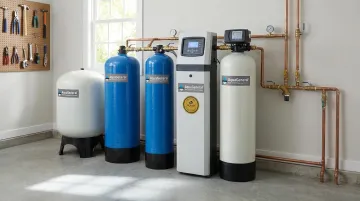
For wells with confirmed bacterial contamination, Aqua General also offers UV germicidal purification — which destroys bacteria and viruses at the source rather than filtering around them.
Long-Term Well Water Safety Practices
Treating a contamination event addresses the immediate problem — but preventing the next one requires an ongoing maintenance routine.
- Keep dated records of all water test results, well inspections, shock chlorination events, and repairs. This history helps identify seasonal patterns and is essential when a licensed contractor needs to troubleshoot a recurring problem.
- Test after every significant event — Houston-area well owners should treat any major flooding, hurricane activity, or nearby septic or construction work as an automatic trigger for testing, not just an optional precaution.
- Address abandoned wells on your property. TCEQ identifies abandoned wells as direct conduits from the surface to the aquifer. Old, unplugged wells can channel surface bacteria straight into groundwater and should be properly sealed by a licensed well driller.
- Schedule well disinfection after confirmed contamination, flooding, or any well or plumbing work — not on a rigid annual calendar, but in direct response to the triggers health authorities have identified as highest risk.
Conclusion
Coliform bacteria in well water is a manageable problem. The root causes are identifiable, the treatment steps are well-established, and consistent prevention habits reduce recurrence substantially. Acting on the right information early matters, because visible symptoms often don't appear until contamination is already significant.
That urgency is especially relevant for homeowners across Harris, Fort Bend, Brazoria, Galveston, and the surrounding counties. The Gulf Coast's rainfall patterns and flood history make proactive well management a genuine health safeguard, not just a maintenance checkbox. Annual testing, structural maintenance after storm events, and the right water treatment infrastructure protect everyone in the household — and catching problems early costs far less than treating illness or rebuilding well infrastructure down the line.
Frequently Asked Questions
Is it okay to have coliform in well water?
No amount of coliform is considered acceptable in a private well — total coliform should be entirely absent in drinking water. While most total coliform strains aren't directly harmful, their presence confirms that a pathway exists for dangerous pathogens like E. coli to enter, and that pathway requires immediate investigation.
Why does my well keep testing positive for coliform?
Persistent positive results almost always mean the structural source hasn't been fully identified and repaired. Common recurring culprits include a cracked casing, a slow septic leak, or surface water intrusion during rain events. Shock chlorination alone won't solve a recurring problem if the entry point remains open.
What is the difference between total coliform and E. coli in well water?
Total coliform is a broad indicator group that includes environmental bacteria not necessarily from waste — a positive result signals a general integrity problem. E. coli is a specific subtype found almost exclusively in fecal matter, making its presence a definitive sign of sewage or animal waste contamination that requires urgent action.
How do I test my well water for coliform bacteria?
Testing requires a sample submitted to a state-certified laboratory using a sterile container, collected from the faucet nearest the wellhead with the aerator removed and water running for 3 minutes first. Professional water testing services eliminate sampling errors that can skew results.
Does boiling water remove coliform bacteria?
Boiling for at least one full minute kills coliform and other pathogens, making it a safe emergency measure. It treats what's already in the glass but does nothing to fix the contamination source or stop it from continuing.
How often should I test my well water for coliform bacteria?
At minimum, once per year — the standard recommended by both the EPA and CDC. Wells with a history of contamination, proximity to septic systems, or location in flood-prone areas (common across the Greater Houston region) should be tested every six months or immediately following any major storm or flooding event.