Water softeners and water filtration systems both improve your water experience, but they solve completely different problems. Confusing them is one of the most common mistakes homeowners make. This guide breaks down how each system works, what separates them, and how to figure out which one — or which combination — your home actually needs.
Key Takeaways
- Filtration systems remove contaminants like chlorine, lead, arsenic, and bacteria to improve water safety and taste
- Water softeners eliminate hardness minerals (calcium and magnesium) that cause scale, soap scum, and appliance damage — but don't make water safer to drink
- Houston's municipal water averages 110 ppm hardness and contains chloramines, trace lead, and disinfection byproducts — most homes need both systems
- No two homes have identical water chemistry; a professional water test is the only reliable starting point
- Running a softener and a filtration system together addresses both hardness and safety in a single setup
Water Filtration System vs. Water Softener: Quick Comparison
| Feature | Water Filtration System | Water Softener |
|---|---|---|
| Primary Purpose | Remove contaminants for health and safety | Remove hardness minerals to protect plumbing and appliances |
| What It Removes | Chlorine, chloramines, lead, arsenic, bacteria, PFAS, VOCs, sediment | Calcium and magnesium ions |
| How It Works | Carbon adsorption, RO membranes, UV sterilization, sediment filtration | Ion exchange (swaps Ca/Mg for sodium or potassium) |
| Drinking Water Safety | Directly improves safety | Does not remove health-related contaminants |
| Best For | Contaminant concerns: taste, odor, heavy metals, chemicals, microbes | Hard water symptoms: scale, spotty dishes, dry skin, appliance damage |
| NSF Standard | NSF/ANSI 42, 53, 55, 58 | NSF/ANSI 44 |
What Is a Water Filtration System?
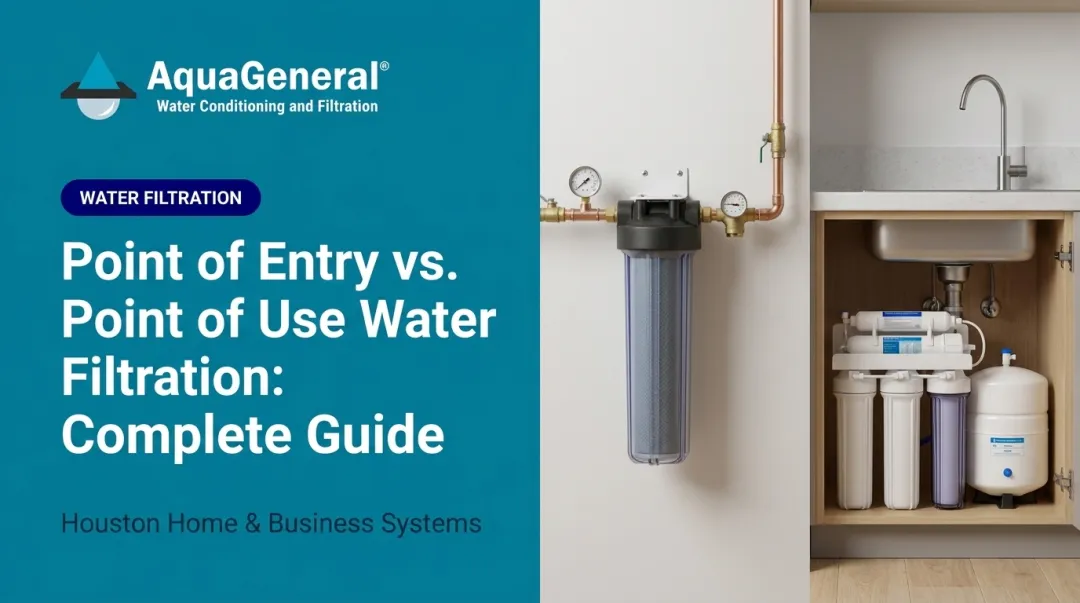
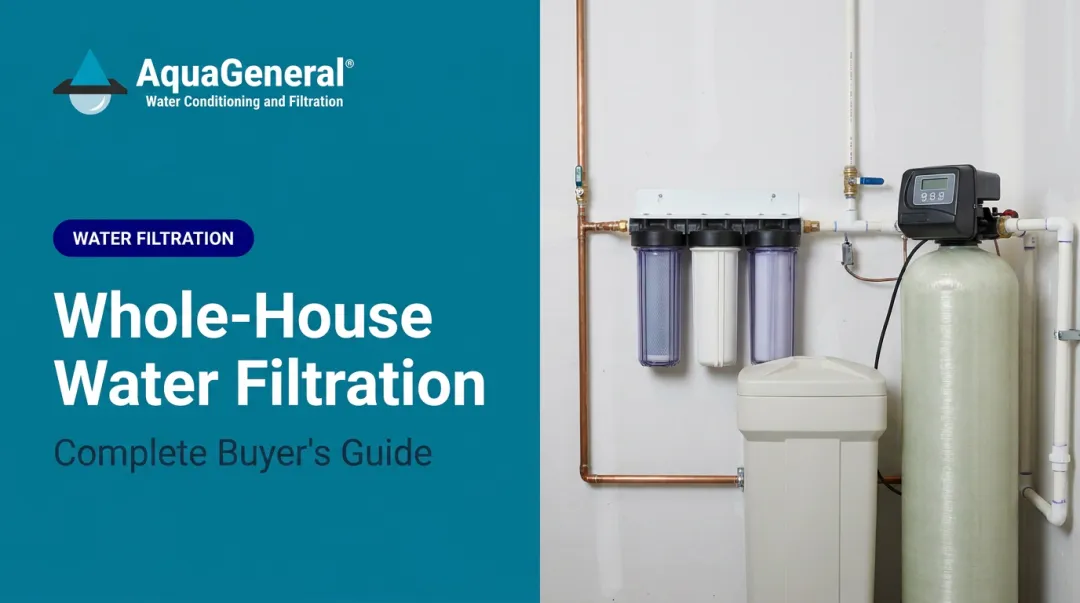
A water filtration system removes a broad range of contaminants to make water safer, cleaner, and better tasting. These range from whole-house point-of-entry systems that treat every tap simultaneously, to under-sink reverse osmosis units at a single faucet.
What Filtration Actually Removes
Houston's municipal water is disinfected with chloramines, with 2024 City of Houston water quality data showing averages around 3.0 ppm in the main system. That same report recorded lead at 4.4 ppb at the 90th percentile and arsenic averaging 1.8 ppb. Filtration is the appropriate response to all of these — not softening.
Certified filtration systems address:
- Chlorine and chloramines — via activated carbon (NSF/ANSI 42)
- Lead and arsenic — via adsorptive media or RO (NSF/ANSI 53 or 58)
- Bacteria and viruses — via UV sterilization (NSF/ANSI 55, Class A) or ultrafiltration
- PFAS — via certified granular activated carbon or RO systems
- Disinfection byproducts (DBPs) — Houston's 2024 data showed HAA5 at 39 ppb and TTHMs at 45 ppb, both below MCL limits but worth addressing
- Sediment and particulates — via physical filtration media
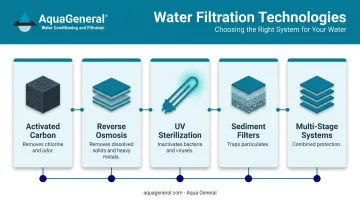
Filtration Technologies at a Glance
- Activated carbon — adsorbs chlorine, chemical taste, and odor
- Reverse osmosis — semi-permeable membrane removing dissolved solids, heavy metals, and PFAS
- UV sterilization — inactivates bacteria, viruses, and cysts without adding chemicals
- Sediment filters — trap particulates and suspended solids
- Multi-stage systems — combine several of the above for broader protection
Aqua General's fine particle filtration reaches 0.02 to 5 microns — smaller than a human red blood cell — making it effective at capturing microscopic particulates that basic filters miss.
When Filtration Is the Right Choice
Whole-house filtration is the right call in these situations:
- Your water has a chemical smell or taste
- You have older plumbing that may leach lead
- You're concerned about arsenic, DBPs, or PFAS exposure
The payoff is immediate: drinking water tastes better, bottled water purchases drop, and chemical exposure decreases — a meaningful difference for households with children or anyone with health sensitivities.
What Is a Water Softener?
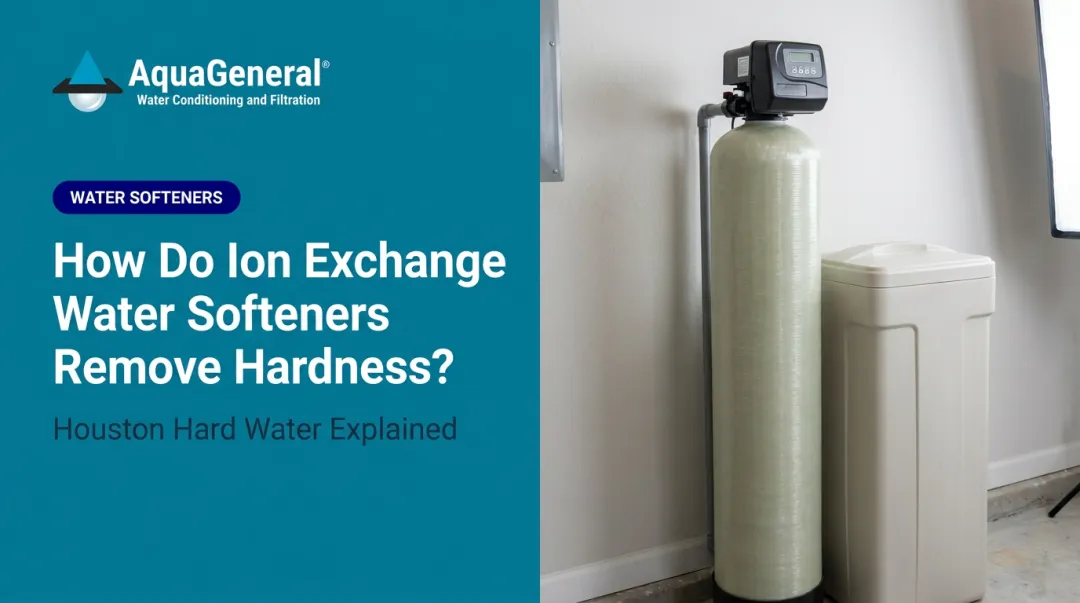
A water softener addresses one specific problem: hard water. It uses ion exchange to swap dissolved calcium and magnesium minerals for sodium or potassium ions, eliminating the root cause of scale buildup throughout your plumbing.
What Hard Water Looks Like
Houston's 2024 water quality report shows the main system averages 110 ppm total hardness as CaCO3 , placing it in the moderately hard range on the USGS scale. Some Houston-area systems run harder: Willow Chase averages 175 ppm, and Sugar Land's main system ranges up to 280 ppm depending on the source blend. Hardness varies significantly by neighborhood and even by season.
Common hard water symptoms Houston homeowners recognize:
- White chalky scale on faucets, showerheads, and around drains
- Spots on dishes and glassware after washing
- Soap that won't lather properly; more detergent needed for laundry
- Stiff, scratchy towels and faded clothes
- Dry or itchy skin after showering
Why Softening Matters for Appliances
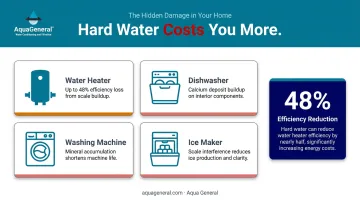
Hard water accelerates wear on every water-using appliance in your home. A study by the Water Quality Research Foundation tested 30 water heaters over 90 days and found that hard water cut efficiency by up to 48% , translating to higher utility bills year over year. A water softener extends the life of dishwashers, washing machines, and ice makers by preventing calcium deposits from accumulating inside.
Softeners Don't Filter Your Water
Softened water is not the same as filtered water. A water softener removes hardness minerals — nothing more. It does not remove chlorine, lead, bacteria, arsenic, or PFAS. If you install a softener expecting cleaner, safer drinking water, you'll be disappointed — that's where a dedicated filtration system comes in.
For homeowners also concerned about sodium intake, salt-free water conditioners (using template-assisted crystallization, or TAC) offer an alternative for moderate hardness. They prevent scale formation without adding sodium to the water, making them worth considering alongside or instead of a traditional ion-exchange softener.
Key Differences Between Water Filtration Systems and Water Softeners
The clearest way to separate these systems: filtration protects your health; softening protects your home. They are not interchangeable, and one does not substitute for the other.
Mechanical Differences
Filtration works through physical and chemical processes (adsorption, membrane separation, UV irradiation) that trap or neutralize contaminants. Softening uses ion exchange exclusively, swapping mineral ions for sodium. Ion exchange does not "filter" in any traditional sense; it simply trades one dissolved substance for another.
Does a Water Softener Filter Water?
No. Softened water may feel cleaner and behave better in your pipes, but it can still contain chloramines, lead, PFAS, and bacteria. The NSF standard for water softeners (NSF/ANSI 44) covers hardness reduction by cation exchange only — it makes no claims about health contaminants. Conversely, standard filtration systems don't soften water unless the system specifically includes an RO membrane or an ion exchange stage.
Health vs. Home: Two Different Outcomes
| Priority | Right System | What It Addresses |
|---|---|---|
| Water safety, taste, drinking quality | Filtration system | Chlorine, lead, bacteria, PFAS, DBPs |
| Scale, appliance damage, soap performance | Water softener | Calcium, magnesium buildup |
| Both concerns present | Combination approach | Everything above |
When You Need Both
Houston's water chemistry makes the combination approach especially common. The same municipal supply that causes scale on your showerhead also carries chloramines, trace lead, and disinfection byproducts — problems only filtration can address.
Aqua General's AquaGuard whole-house water conditioner handles both sides of that problem. It combines softening, anti-microbial protection, chemical reduction, and fine particle filtration down to 0.02 microns in a single system, built for homeowners who face both hardness and contamination concerns at once.
Which System Does Your Home Need?
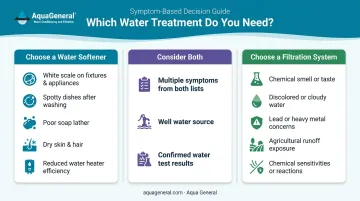
Use this symptom-based guide as a starting point:
Lean toward a water softener if you notice:
- White scale on faucets, showerheads, or around fixtures
- Spotty dishes or glassware after the dishwasher
- Soap that won't lather; excessive detergent use
- Dry, itchy skin or stiff laundry
- Reduced hot water heater efficiency
Lean toward a filtration system if you notice:
- Chemical smell or taste in tap water
- Discolored water or visible sediment
- Concerns about lead (older plumbing), arsenic, or PFAS
- Homes near agricultural or industrial areas with runoff concerns
- Anyone in the household with sensitivities to chemical contaminants
Consider both if:
- You have multiple symptoms from both lists
- You're on a well — well water in the Houston area often presents both hardness and microbial concerns
- Your water test reveals hardness AND contaminant issues
No symptom checklist replaces an actual water test. Houston-area water chemistry varies by neighborhood, water source, and even season. What's true in Katy may differ from Galveston or Conroe.
Aqua General's WQA-certified water specialists serve Harris, Fort Bend, Montgomery, Galveston, Brazoria, and surrounding counties, and offer free on-site water testing to identify exactly what's in your water before recommending any system. A test takes the guesswork out of the decision — and it's free.
Frequently Asked Questions
Who should not drink softened water?
People on low-sodium diets or with heart or kidney conditions should be cautious, since ion exchange adds roughly 30 mg of sodium per gallon per grain of hardness removed. A reverse osmosis drinking water system at the tap removes that sodium, or a salt-free conditioner sidesteps the issue entirely.
Will a water softener help with sulfur smell?
No. A standard water softener is not designed to remove hydrogen sulfide, the compound responsible for a rotten egg odor. Addressing sulfur requires a dedicated filtration system — typically an oxidizing filter, aeration system, or activated carbon filter — sulfur odor is a filtration problem that softening alone cannot solve.
Does a water filter stop E. coli?
UV sterilization (NSF/ANSI 55, Class A), ultrafiltration membranes (0.001–0.05 microns), and reverse osmosis can remove or inactivate E. coli. A standard carbon or sediment filter is not sufficient — the specific filter type and its NSF certification are what matter.
What is the best water filter for arsenic?
Reverse osmosis (NSF/ANSI 58) and activated alumina are the most effective options; look for systems certified to NSF/ANSI 53 or 58 for arsenic claims specifically. Houston's 2024 data showed arsenic averaging 1.8 ppb with a maximum of 9.9 ppb, so a water test first confirms whether treatment is needed.
Can I use a water softener and a water filtration system together?
Yes — and it's one of the most common configurations for comprehensive water treatment. The softener handles hardness to protect plumbing and appliances, while the filtration system removes health-related contaminants. Many homeowners install a whole-house filter at the point of entry, followed by a softener in sequence.
How do I know if I have hard water in the Houston area?
Common signs include white scale on faucets and showerheads, spotty dishes, low soap lather, and dry skin after showering. Houston-area water hardness varies widely — the city's main system averages around 110 ppm, but some suburban systems run considerably higher. A water hardness test or professional assessment confirms exact levels and points to the right treatment.