Introduction
Your UV water treatment system works around the clock neutralizing bacteria, viruses, and other pathogens - no chemicals, no byproducts. Using UV-C light at 254 nanometers, it adds a critical disinfection layer that softeners and carbon filters alone can't provide. For Houston-area homeowners dealing with hard water and variable source quality, that extra protection matters.
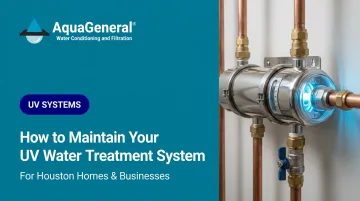
Here's the catch: UV systems fail silently. When a lamp exceeds its useful life, it keeps glowing - that familiar blue light looks exactly the same whether it's actively disinfecting or doing nothing. Water flows through untreated, and you'd never know. That's why professional maintenance isn't optional - it's the only way to be certain your system is actually protecting your family.
Why UV Systems Require Professional Maintenance
Silent Failures You Can't See
UV lamp manufacturers confirm that the blue glow from a UV lamp is a byproduct of its mercury arc - not germicidal UV-C output. UV-C is invisible. A lamp that has logged more than 9,000 hours may still illuminate perfectly while delivering zero disinfection. Your system looks operational. Your water is unprotected. Without professional service and proper equipment testing, there's no reliable way to confirm your system is functioning correctly.
The Shadowing Problem
Even a functioning lamp can be undermined by what's in the water around it. When sediment, mineral scale, or biofilm coats the quartz sleeve, UV light can't penetrate the water column effectively. Suspended particles create "shadows" - pockets where bacteria pass through the chamber completely unaffected.
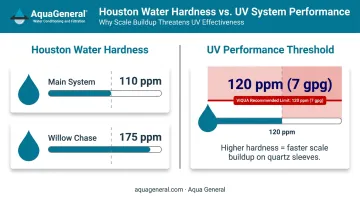
Houston's water chemistry makes this especially relevant. According to the 2024 Houston Water Quality Report, total hardness in the Main System averages 110 ppm, while Willow Chase customers see an average of 175 ppm. UV system pretreatment guidance recommends hardness below 7 gpg (120 ppm) for optimal UV performance - meaning a significant portion of Houston's service area pushes right up against or exceeds that threshold, accelerating calcium scale buildup on quartz sleeves.
The Real Cost of Skipping Professional Service
Neglected UV systems don't announce problems. Every day your system runs degraded, downstream appliances - ice makers, dishwashers, whole-house plumbing - receive water that bypassed disinfection entirely. Proactive professional maintenance costs a fraction of what reactive repairs or remediation do.
What Aqua General's UV System Service Covers
Aqua General's WQA-certified technicians handle every component of UV system maintenance properly, with the right parts, tools, and diagnostic equipment to confirm your system is actually working - not just that it appears to run.
UV Lamp Service
Most residential UV lamps reach end of useful life at approximately 9,000 hours - roughly 12 months of continuous operation. Aqua General sources manufacturer-approved replacement lamps matched to your specific system. Our technicians handle lamps correctly to prevent contamination, verify ballast and controller operation after replacement, and confirm the system is delivering germicidal output before leaving your home.
Quartz Sleeve Inspection and Service
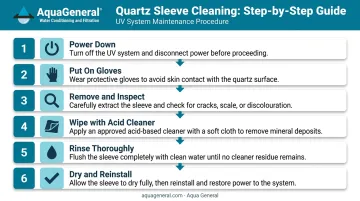
The quartz sleeve surrounds the lamp and allows UV-C light to pass into the water column. Mineral deposits, iron staining, and biofilm that accumulate on the sleeve's surface all reduce disinfection effectiveness directly. Aqua General's technicians inspect the sleeve during every service visit, clean or replace it as conditions require, and verify that it is properly seated and sealed. Houston's hard water environment accelerates scale buildup, so sleeve condition is evaluated at every visit rather than on a fixed calendar schedule.
Pre-Filter Replacement
UV system manufacturers are explicit: a 5-micron nominal sediment filter must be installed upstream of any UV system. Without it, particulate matter in the water shields microorganisms from UV exposure. Aqua General evaluates pre-filter condition during service visits and replaces cartridges on the appropriate schedule for your specific water quality and usage. Pairing your UV system with a water softener upstream reduces hardness before water reaches the UV chamber, extending sleeve life and reducing how often pre-filters need service.
Seals and System Integrity
O-rings create the watertight seal around the UV chamber. They degrade with age and UV exposure. Water intrusion into the electrical housing is a real risk with deteriorated seals, and moisture entry into the controller or ballast assembly can cause costly electrical damage. Aqua General's technicians inspect all seals during service and replace any that show wear - catching this before it becomes an expensive repair.
Warning Signs Your UV System Needs Service Now
UV systems rarely announce problems loudly. Contact Aqua General if you notice any of the following.
Indicator Light or Alarm Activity
Most systems track lamp hours from the last reset, typically 365 days. When the timer hits zero, an audible alarm sounds and the indicator light changes. More advanced systems include an actual UV sensor that monitors germicidal output in real time. If your alarm has triggered, call for service immediately - resetting the alarm without replacing the lamp leaves your water unprotected.
Visible Sleeve Discoloration or Reduced Water Flow
Cloudy or yellowed sleeve appearance indicates mineral scale blocking UV light. Orange tinting signals iron staining, common in areas with elevated iron levels. A noticeable drop in flow rate or water pressure from your treated line often means the pre-filter is clogged. Either condition warrants a professional service call.
Unexplained Odor or Water Quality Changes
A musty smell, unusual taste, or elevated bacteria count on a water test points directly to UV system failure - most likely an expired lamp or fouled quartz sleeve. The CDC recommends private well owners test for total coliform bacteria at least annually. Even on municipal supply, an annual bacteria test independently confirms your UV system is working.
Aqua General's UV System Service Schedule
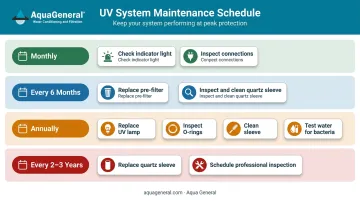
Aqua General's certified specialists can manage your entire UV system maintenance schedule, eliminating the guesswork and ensuring every component is serviced at the right interval for your specific water conditions.
Houston-area homeowners who want a certified technician to handle annual service can call (713) 664-4601 to schedule. Aqua General stocks replacement parts and services UV systems from many major brands.
Conclusion
A UV water treatment system works only as well as the maintenance behind it. A glowing lamp that's past 9,000 hours, a scale-coated quartz sleeve, or a clogged pre-filter all produce the same result: water passes through the chamber completely untreated while your indicator light sits green.
Don't leave your family's water protection to guesswork. Aqua General's certified specialists evaluate your full system - from pre-treatment pairing to annual lamp service. With over 32 years serving Greater Houston homeowners and businesses, the team knows exactly what Houston's hard water demands from a UV system. Contact Aqua General today to schedule professional UV system maintenance.
Frequently Asked Questions
How often should I have my UV water filter professionally serviced?
Aqua General recommends annual professional service for most residential UV systems. At that visit, a technician replaces the UV lamp, inspects the quartz sleeve, evaluates pre-filter condition, and checks all seals and electrical components. Houston's hard water environment may call for more frequent sleeve inspection given accelerated mineral scale buildup.
How long do UV water systems last?
With regular professional maintenance - annual lamp service, periodic sleeve service, and timely pre-filter replacement - a UV system can last 10 or more years. That lifespan depends entirely on consistent upkeep by qualified technicians who know the right service intervals for your specific water conditions.
What happens if I don't replace my UV lamp on time?
The lamp continues to glow but stops emitting effective germicidal UV-C output. Water flows through the chamber completely untreated, exposing anyone who drinks it to bacteria and pathogens, with no visible sign that anything has changed. Annual professional service by Aqua General ensures this never happens.
Can I turn my UV water system off when I'm not using it?
Leave it running. Each power cycle burns lamp life, and forgetting to restart it leaves your water unprotected. For seasonal shutdowns, contact Aqua General - our technicians can evaluate your system before and after any extended off period to make sure it's operating correctly.
Do I need a pre-filter before my UV water treatment system?
Yes - a 5-micron sediment pre-filter upstream is essential. Without it, particulate matter in the water creates shadows that shield bacteria from UV exposure, bypassing disinfection even with a working lamp. Aqua General evaluates your full pre-treatment configuration as part of every UV system service visit.
How do I know if my UV system is working properly?
The most reliable way is a professional service visit combined with a bacteria test on your water supply. Aqua General's technicians confirm indicator light status, inspect quartz sleeve condition, verify lamp output, and can arrange water testing - giving you documented confirmation your system is actually protecting your water.