When homeowners start researching water purification, two methods come up repeatedly: ozone treatment and reverse osmosis. Both work — but in fundamentally different ways and for different purposes. Ozone uses oxidation chemistry to destroy contaminants; RO uses a physical membrane to block them.
This guide covers how each system works, what contaminants each addresses, the real benefits and risks of both, and how to choose the right approach for your home or business.
Key Takeaways
- Ozone destroys bacteria, viruses, and organic compounds but leaves no lasting residual and cannot remove metals, salts, or PFAS
- Reverse osmosis removes 90%+ of PFAS and is certified under NSF/ANSI 58 to reduce total dissolved solids by at least 75%
- Efficient RO models (WaterSense-labeled) use 2.3 gallons of reject water or less per gallon purified — down from 5+ on older systems
- For most Houston-area homes, RO is the more comprehensive and practical drinking water solution
- Ozone and RO can work together: ozone pre-treatment reduces membrane fouling in commercial and high-demand applications
Ozone vs. Reverse Osmosis: Quick Comparison
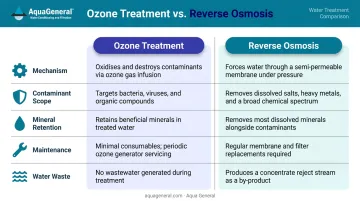
Here's a side-by-side look at how ozone treatment and reverse osmosis compare across the factors that matter most to homeowners and businesses:
| Dimension | Ozone Treatment | Reverse Osmosis |
|---|---|---|
| Mechanism | Chemical oxidation destroys cell walls and DNA of microorganisms | Pressure forces water through a ~0.0001-micron membrane |
| Contaminant Scope | Bacteria, viruses, fungi, odor/taste, some organics | Dissolved salts, heavy metals, PFAS, nitrates, TDS, microorganisms |
| Mineral Retention | Preserves naturally occurring minerals | Removes most minerals including calcium and magnesium |
| Maintenance | Higher equipment cost; energy-intensive; safety protocols required | Periodic membrane and filter replacement; homeowner-manageable |
| Water Waste | None — all treated water is usable | Traditional: 5+ gallons wasted per gallon purified; efficient models: ~2.3 gallons wasted per 1 gallon purified |
What Is Ozone Water Treatment?
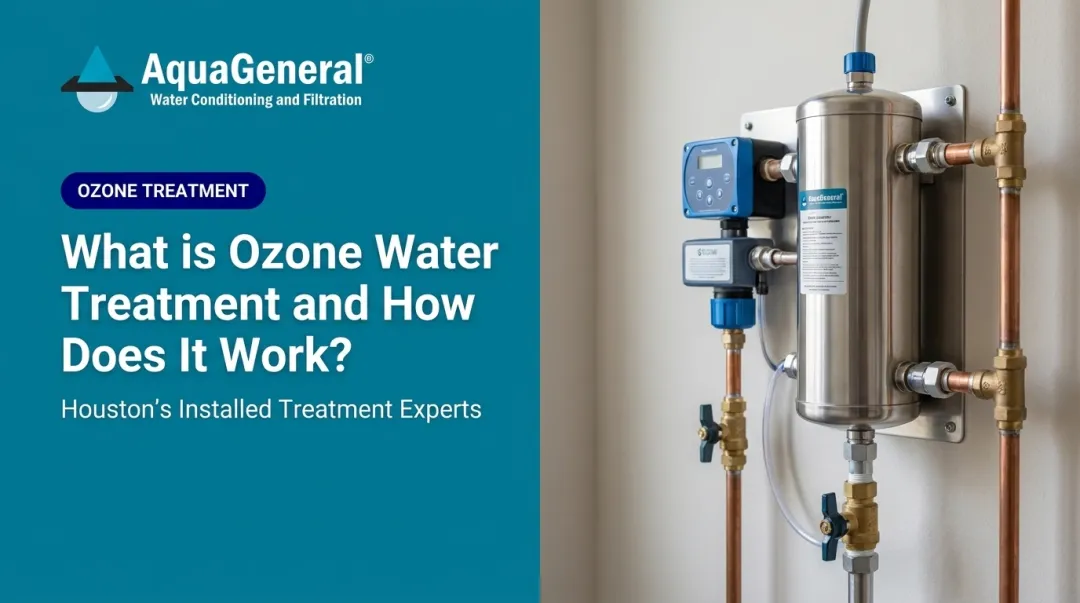
Ozone (O3) is a molecule of three oxygen atoms and one of the most powerful oxidants commercially available. According to EPA's Alternative Disinfectants Guidance Manual, ozone has an oxidation potential of 2.07 volts compared to chlorine's 1.36 volts — making it substantially more reactive as a disinfectant.
Because ozone is unstable under normal conditions, it must be generated on-site. An ozone generator converts oxygen into O3 via high-voltage corona discharge, then injects or bubbles the gas into water. From there, ozone works through two pathways:
- Direct oxidation — attacks unsaturated organic bonds in contaminants
- Indirect oxidation — ozone decomposes in water to form hydroxyl radicals, which are highly reactive and non-selective
Both pathways break down the cell walls and DNA of bacteria, viruses, fungi, and parasites. Ozone then reverts to ordinary oxygen, leaving no chemical residue in the treated water.
Benefits of Ozone Treatment
- No chemical byproducts in water — ozone breaks back down into oxygen after treatment, eliminating the taste and odor issues associated with chlorine
- Fast-acting across a wide pH range — effective against a broad spectrum of pathogens without pH adjustment
- Oxidizes iron, manganese, and sulfur — can reduce color, taste, and odor issues in source water
- No lasting residue — appealing for applications where chemical-free water is a priority
These strengths make ozone effective for disinfection and aesthetic water issues. However, the technology carries specific limitations that matter before committing to it as a standalone solution.
Risks of Ozone Treatment
Weigh these trade-offs carefully, particularly if you're evaluating ozone for a residential or commercial application:
- Bromate formation — when ozone reacts with naturally occurring bromide in source water, it can produce bromate, a potential carcinogen. The EPA's maximum contaminant level for bromate is 0.010 mg/L
- No disinfection residual — ozone doesn't persist in water after treatment. If treated water sits in storage tanks or travels through pipes, there's no ongoing protection against re-contamination
- Operational safety requirements: ozone is a toxic gas with an OSHA permissible exposure limit of 0.1 ppm. Proper containment, ventilation, and operator training are required
- Limited contaminant scope — ozone does not remove dissolved heavy metals, salts, TDS, or PFAS from water. For households dealing with these contaminants, ozone alone is insufficient
What Is Reverse Osmosis Water Treatment?
Reverse osmosis forces water under pressure through a semi-permeable membrane with pores approximately 0.0001 microns in size — small enough to block virtually all dissolved solids, ions, heavy metals, and microorganisms while allowing water molecules through.
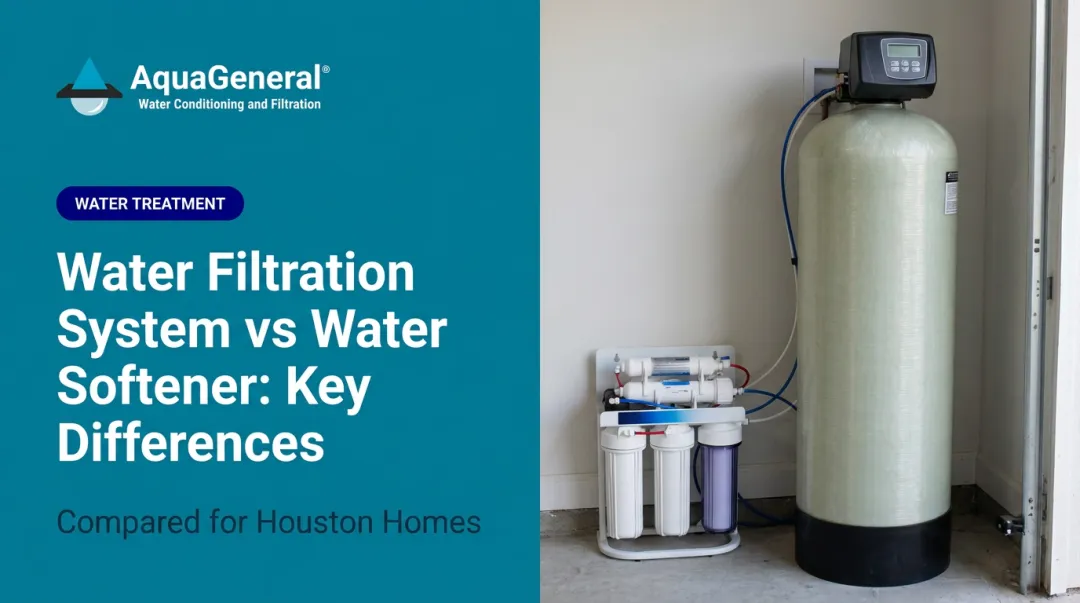
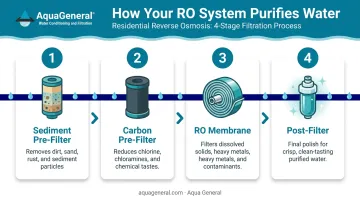
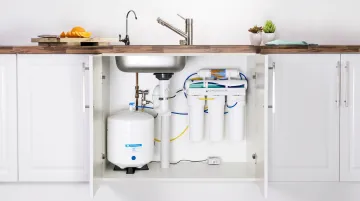
A certified residential RO system typically runs through multiple stages:
- Sediment pre-filter — removes larger particles that would clog or damage the membrane
- Carbon pre-filter — removes chlorine and chloramines that would degrade membrane integrity
- RO membrane — handles dissolved contaminants including heavy metals, salts, PFAS, and more
- Post-filter — polishes the water before delivery to the tap
Systems tested and certified under NSF/ANSI 58 — the standard governing point-of-use RO systems — must demonstrate a minimum 75% TDS reduction and validated performance for each specific contaminant removal claim they make.
Benefits of Reverse Osmosis
Contaminant removal is where RO earns its reputation. NSF/ANSI 58-certified systems address:
- Lead, arsenic, barium, copper, and hexavalent chromium
- Nitrates and nitrites
- Disinfection byproducts
- Cysts and microorganisms
- PFAS — EPA reports RO membranes are more than 90% effective at removing a wide range of PFAS, including shorter-chain compounds that other filter types struggle with
- Dissolved solids and TDS broadly
Drinking water quality improves measurably. By removing dissolved minerals, chemicals, and microorganisms, RO produces clean-tasting water — eliminating the need for bottled water purchases and improving the quality of coffee, cooking water, and everyday hydration.
For households where that level of protection matters, Aqua General's WQA- and NSF-certified RO systems add fine particle filtration with anti-microbial media that inhibits bacteria growth within the system itself — something standard off-the-shelf units typically don't include.
Risks of Reverse Osmosis
Mineral depletion is the most cited concern. The RO membrane doesn't distinguish between harmful contaminants and beneficial minerals like calcium and magnesium — research indicates it can remove 92–99% of both.
The WHO has examined health implications of long-term low-mineral water consumption. Pairing an RO system with a remineralization or alkaline post-filter is a straightforward way to address this; a certified water specialist can advise on whether it makes sense for your household.
Reject water is a real operational consideration. According to EPA WaterSense data, a typical point-of-use RO system sends 5 or more gallons of reject water down the drain per gallon of purified water — with inefficient units reaching up to 10:1. WaterSense-labeled models must meet a maximum ratio of 2.3 gallons of reject water per gallon treated, making system selection an important environmental and cost decision.
Ozone vs. Reverse Osmosis: Which Is Right for Your Home?
The right choice depends on your specific contaminants, water use case, and budget. Starting with a water quality test — rather than guessing — is the most reliable first step.
When Ozone Makes More Sense
Ozone is best suited for:
- Commercial food and beverage operations where rapid, chemical-free microbial disinfection is the primary goal
- Bottled water production facilities requiring pathogen destruction without chemical residue
- Pre-treatment before RO membranes in larger-scale systems — peer-reviewed research published in Water Research found that pre-ozonation at a dose of 0.25 mg O3/mg DOC significantly reduced RO membrane biofouling, helping extend membrane life in commercial applications
Ozone is not the right standalone solution for residential drinking water where heavy metals, PFAS, or complex contamination profiles are present.
When Reverse Osmosis Is the Better Choice
For most Houston-area homeowners, RO is the stronger option. It directly addresses:
- Heavy metals (lead, arsenic, hexavalent chromium) found in both municipal and well water
- PFAS compounds increasingly detected in Texas water supplies
- Chloramines used by Houston-area utilities — which standard carbon filters can't fully remove
- Nitrates, disinfection byproducts, and dissolved solids broadly
Can They Work Together?
Yes. Ozone as a pre-treatment stage handles microbial disinfection and organic oxidation, which protects the RO membrane from biofouling and extends its operational lifespan. Commercial and high-demand treatment facilities have used this combined approach with documented success.
For residential use, this configuration is less common but may be worth discussing with a certified specialist if your source water carries a significant microbial load.
Situational Summary
| Situation | Recommended Approach |
|---|---|
| Primary concern is bacteria/virus disinfection, commercial scale | Ozone (standalone or pre-treatment) |
| Residential drinking water with heavy metals, PFAS, or TDS | Reverse osmosis |
| Commercial facility with high microbial and dissolved-solid concerns | Ozone + RO combined |
| Houston municipal water with chloramines and PFAS concern | Certified RO system |
| Well water with mixed contamination profile | Water test first; likely RO |
If you're unsure where your water falls, a professional test removes the guesswork. Aqua General's WQA-certified specialists have been testing and treating water across Harris, Fort Bend, Montgomery, Galveston, and surrounding counties for over 32 years — and can recommend a system matched to your actual contamination profile.
Conclusion
Neither ozone treatment nor reverse osmosis is universally superior. Ozone is a powerful disinfection tool; RO is a comprehensive contaminant removal system. For most residential applications — particularly in the Houston area where municipal water contains chloramines, and where PFAS, lead, and arsenic are documented concerns — reverse osmosis remains the more practical and thorough choice for drinking water purification.
Homeowners and businesses don't have to figure this out alone. Aqua General offers free on-site water testing across the Greater Houston metropolitan area, with certified specialists who can identify your specific water concerns.
Whether you need an RO system, a whole-house solution, or a combination approach, Aqua General recommends WQA- and NSF-certified systems matched to your situation.
Contact Aqua General at (713) 664-4601 or service@aquageneral.com to schedule a consultation.
Frequently Asked Questions
Is ozonated water better than reverse osmosis?
Not for most residential applications. Ozone excels at rapid, chemical-free disinfection of bacteria and viruses but cannot remove dissolved heavy metals, salts, or PFAS. RO provides broader contaminant removal and is generally the more comprehensive choice for home drinking water.
Is it healthy to drink ozonated water?
Properly ozonated water is safe when source water is clean, as ozone reverts to oxygen and leaves no chemical residue. However, if source water contains bromide, ozonation can produce bromate, a regulated potential carcinogen with an EPA limit of 0.010 mg/L, making water quality testing essential before using ozone treatment.
What is the healthiest water filtration system?
RO systems certified under NSF/ANSI 58 are among the most comprehensive residential options, removing the widest range of harmful contaminants. Pairing RO with a remineralization post-filter restores beneficial minerals — and a free on-site water test from a specialist like Aqua General helps identify the right system for your specific water quality.
What contaminants does reverse osmosis remove?
Certified RO systems address lead, arsenic, hexavalent chromium, PFAS, nitrates, TDS, disinfection byproducts, and cysts. EPA data confirms RO is more than 90% effective against a wide range of PFAS. NSF/ANSI 58 certification validates performance for each specific contaminant removal claim a system makes.
Can ozone treatment and reverse osmosis be used together?
Yes. Ozone as a pre-treatment stage handles microbial disinfection and organic oxidation before water reaches the RO membrane, reducing biofouling and helping extend membrane life. This combined approach is common practice in commercial and high-demand treatment applications.
Does reverse osmosis remove beneficial minerals from water?
It does — RO removes most minerals including calcium and magnesium, with some studies reporting 92–99% removal. Adding a remineralization or alkaline post-filter restores beneficial trace minerals, making RO-treated water both safe and more nutritionally balanced.