The Gulf Coast region's geology makes this especially common. The Chicot and Evangeline aquifers underlying the Houston area consist of fluvial-deltaic sand, silt, clay, and gravel formations where iron naturally dissolves into groundwater under the right geochemical conditions. Add aging well infrastructure and the occasional iron bacteria colony, and you have a problem that can affect wells across Harris, Fort Bend, Montgomery, and surrounding counties.
The good news: iron in well water is manageable. Understanding where it comes from, what it does to your home, and how to match the right treatment to your specific water chemistry is the starting point.
Key Takeaways
- Iron enters well water through geological seepage, corroded pipes or casings, and iron bacteria — sometimes all three at once.
- Three forms require different treatments: dissolved ferrous iron, particulate ferric iron, and organically bound iron.
- The EPA's secondary standard sets 0.3 mg/L as the threshold where staining and taste problems typically begin.
- The right treatment — softener, air injection filter, greensand filter, or whole-house system — depends on your water test results.
- Professional testing before purchasing any system is non-negotiable.
Why Does Iron End Up in Your Well Water?
Private well water has no centralized treatment barrier between the aquifer and your tap. Whatever minerals the groundwater carries — including iron, which leaches readily from surrounding soil and rock — flows directly into your home. That's why iron is one of the most common well water problems in the Houston area.
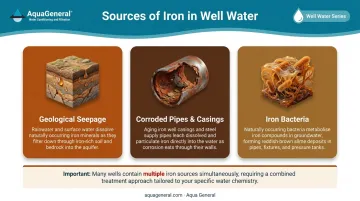
Iron in well water typically comes from one or more of three distinct sources. Identifying which applies to your well determines your treatment path.
Geological Seepage
As rainwater and surface water percolate through iron-bearing soil and rock, they dissolve iron from the surrounding geology and carry it into underground aquifers. The Gulf Coast aquifer system — which includes the Chicot, Evangeline, and Jasper units underlying Greater Houston — consists of fluvial-deltaic sediments where iron sulfides and oxides can dissolve under specific redox conditions, according to Texas Water Development Board geochemical data. Deeper wells tend to show higher concentrations because water spends more time in contact with iron-bearing rock before reaching the surface.
Corroded Well Casings and Pipes
Aging iron or steel well casings and galvanized household pipes can corrode over time, leaching iron directly into the water supply. Unlike geological seepage, this source is entirely man-made — iron levels can spike even in areas where aquifer iron is naturally low. Corrosion accelerates when water pH drops below 6.5, which is why pH testing is part of any proper well water assessment. Homes with older galvanized plumbing or wells that haven't been professionally inspected in years are most vulnerable.
Iron Bacteria
Iron bacteria are naturally occurring microorganisms — including genera like Gallionella, Leptothrix, and Crenothrix — that use dissolved iron as an energy source, producing a reddish-brown slime called biofilm inside pipes, well casings, and toilet tanks. They're not classified as a direct health hazard, but they degrade water quality, accelerate pipe clogging, and make existing iron problems considerably harder to treat.
A simple screening check: Lift your toilet tank lid. Gelatinous slime, slimy strands, an oily sheen, or a musty/swampy odour are recognised field indicators of iron bacteria, according to Minnesota Department of Health guidance. Note that visible signs are suggestive, not definitive — laboratory confirmation is the only way to diagnose iron bacteria with certainty. Once established, they're difficult to eliminate and often require shock chlorination alongside standard iron filtration.
What Iron in Well Water Does to Your Home
The EPA classifies iron as a "secondary contaminant," meaning it isn't considered a direct health hazard at typical well water concentrations. That designation, however, doesn't reflect the real and progressive damage iron causes inside your home.
Three categories of harm matter most:
Taste and food quality
- Metallic, bitter-tasting drinking water
- Darkened coffee, tea, and cooked vegetables
- Noticeable off-flavours in ice
Staining
- Rust-coloured deposits on sinks, tubs, toilets, and shower grout
- Orange or brown stains on laundry that resist bleaching
- Staining on dishes and tableware
- Concentrations as low as 0.3 mg/L can leave stains that resist removal once set
Mechanical damage
- Iron deposits and bacterial biofilm accumulate inside dishwashers, water heaters, and pipes
- Sprinkler heads and irrigation systems clog progressively
- Reduced water flow and decreased appliance efficiency over time
Warning Signs You Have an Iron Problem
Iron doesn't always announce itself visibly at the tap. Dissolved ferrous iron produces water that initially looks completely clear — color and staining only emerge after the water is exposed to oxygen and oxidizes.
That means you can have a significant iron problem without ever seeing discolored water come out of the faucet.
Watch for:
- Water that initially runs clear but develops rust-coloured particles after sitting in a glass or on a wet surface
- Persistent reddish-brown staining on fixtures, shower grout, or clothing that returns after cleaning
- Slime, dark residue, or frothy buildup inside the toilet tank
- Unexplained drops in water pressure from dishwashers or irrigation systems
How to Remove Iron from Well Water
Treatment selection is not guesswork. It depends on three factors from your water test: iron concentration (measured in mg/L or ppm), the form of iron present, and whether iron bacteria are detected. The Penn State Extension's guidance on iron in private water systems outlines specific operating boundaries for each treatment method. Using the wrong system doesn't just fail to work — it can foul your equipment and create a more expensive problem.
The four main removal approaches, and when each applies:
Water Softeners for Low-Level Dissolved Iron
A conventional ion-exchange water softener removes dissolved ferrous iron alongside calcium and magnesium, exchanging these minerals for sodium on a resin bed. Periodic backwashing flushes accumulated iron from the resin.
Works when:
- Dissolved ferrous iron is below 2–5 mg/L
- Water pH is above 6.7
- No oxidized (ferric) iron is present before the softener
Ferric iron fouls the resin bed rapidly. A softener is not a primary iron filter — it's a complementary tool for low-level dissolved iron where hardness is also a concern.
Air Injection and Oxidation Filters
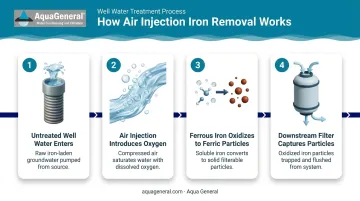
Air injection systems introduce oxygen into the water, converting dissolved ferrous iron into solid ferric particles that a downstream filter then captures. No treatment chemicals are added to the water itself, which makes this a practical choice where chemical handling is a concern — and when iron bacteria are present, the oxidation process can help address those as well.
The system requires regular backwashing to flush accumulated particles, and an aeration unit always needs a downstream filtration stage — it cannot work alone. Performance depends on water chemistry, pH, contact time, and filtration design, so a water analysis is essential before sizing an air injection system.
Greensand Filters for Moderate to High Iron
When iron levels climb beyond what air injection handles efficiently, a manganese greensand filter is worth considering. It uses a potassium permanganate-treated media that both oxidizes dissolved iron on contact and filters the resulting particles, combining oxidation and filtration in a single tank.
Works when:
- Iron concentrations fall in the 3–10 mg/L range (WQA glossary places the range at 4–10 mg/L)
- Regular regeneration with potassium permanganate is feasible
Potassium permanganate is an effective regenerant but requires careful handling and storage. Penn State's guidance classifies it as toxic, so storage and handling protocols matter. Maintenance frequency increases at higher iron levels.
Whole-House Filtration for Complex Iron Problems
For Houston-area well owners dealing with high iron levels, iron bacteria, or multiple water quality issues simultaneously — such as hardness, iron, and chemical contamination — a whole-house point-of-entry filtration system provides the most comprehensive solution.
Aqua General's whole-house water conditioner, for example, combines softening, anti-microbial media, chemical reduction, and fine particle filtration down to 0.02–5 microns in a single system designed to address complex well water challenges.
Because no two wells share identical water chemistry, a WQA Certified Water Specialist will test for iron type and concentration, pH, hardness, and iron bacteria presence before recommending a correctly sized solution. Aqua General offers free on-site water testing for Houston-area homeowners — a practical first step before committing to any system.
Tips for Long-Term Iron Control in Your Well
Iron problems tend to return or worsen without ongoing attention. These practices keep them in check:
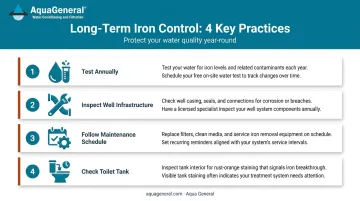
Test annually — and immediately if you notice any change in taste, color, or odor. The CDC and EPA recommend testing private wells at least once a year, with prompt retesting any time water quality shifts.
Inspect well infrastructure — check the well casing, pressure tank, and visible plumbing every one to two years for rust or corrosion. Replacing aging galvanized pipes with corrosion-resistant alternatives removes a common secondary iron source.
Follow your system's maintenance schedule — backwash filters on schedule, regenerate softener resin properly, and have a water treatment professional service your system annually to prevent iron breakthrough and media fouling.
Check your toilet tank every few months — it costs nothing and takes 30 seconds. Catching slime buildup early allows for shock chlorination before biofilm spreads deeper into your plumbing.
Staying consistent with these steps is the difference between managing iron long-term and constantly reacting to it. If problems persist despite regular maintenance, a professional water test can pinpoint whether your treatment system needs adjustment or replacement.
Conclusion
Iron in well water has identifiable sources — geological seepage through the Gulf Coast aquifer system, corrosion from aging infrastructure, and iron bacteria — and each responds to specific treatment approaches. The staining, taste problems, and mechanical damage iron causes are real, but they're not permanent.
With the right testing and a properly matched filtration system, Houston-area well owners can protect their home, appliances, and water quality for years to come. Aqua General offers free on-site water testing and has been designing well water treatment solutions — including iron and sulfur removal systems — across the Greater Houston area for over 32 years. If iron is affecting your water, that's a straightforward problem to solve with the right professional in your corner.
Frequently Asked Questions
Is it safe to drink well water with iron in it?
The EPA classifies iron as an aesthetic contaminant, not a direct health hazard at typical well water concentrations. However, very high levels or the presence of iron bacteria warrant professional evaluation — a water test from a certified specialist will clarify your risk level and point to the right treatment.
How do you get rid of iron in your well water?
Removal depends on iron type and concentration. Water softeners handle dissolved iron below 5 mg/L. Air injection or greensand filters address moderate to high levels. Whole-house systems cover complex cases with multiple contaminants. Always start with a professional water test.
Does iron in well water damage hair?
A 1989 case report linked iron-containing wash water to hair and nail discoloration, particularly an orange or brassy tint. Research on structural hair damage remains limited. A whole-house iron filter is the most practical solution if you're noticing discoloration, especially with lighter or chemically treated hair.
What are the signs of iron in well water?
Common indicators include:
- Rust-colored or brown staining on fixtures and laundry
- Metallic taste in drinking water
- Discolored water at the tap
- Slimy buildup inside the toilet tank
Keep in mind that dissolved iron can be invisible until it oxidizes after leaving the tap.
What is the acceptable iron level in well water?
The EPA's secondary standard recommends iron levels below 0.3 mg/L (parts per million). Above this threshold, aesthetic problems like staining and metallic taste typically begin to appear, making treatment worthwhile even if health risk remains low.
Does iron in well water damage appliances?
Yes. Iron deposits build up inside dishwashers, water heaters, washing machines, and pipes over time — reducing flow, cutting efficiency, and shortening equipment lifespan. Treating iron protects both your water quality and your appliances.